Turf
How Artificial Turf Saves Water and Time
A live lawn in the Inland Empire is a standing monthly bill and a weekly chore. Here's what switching to turf actually changes.
The water math
A typical Southern California lawn drinks 30–60 inches of supplemental water a year. On a 1,000-square-foot lawn that’s tens of thousands of gallons — and in summer, when tiered water rates bite hardest, it’s often the single biggest line on the bill. Artificial turf takes that to near zero: an occasional rinse to keep it clean and cool, nothing more. Most homeowners we work with see the difference on the very next billing cycle.
The time and equipment you get back
No mowing, no edging, no fertiliser schedule, no reseeding bare patches every fall, no sprinkler heads to replace when the mower clips them. That’s roughly an hour a week back in your weekend from spring through fall, plus the shed space and the gas can. For rental owners and busy households, predictable is the real win — the yard looks the same in August as it does in March.
Where the savings can go wrong
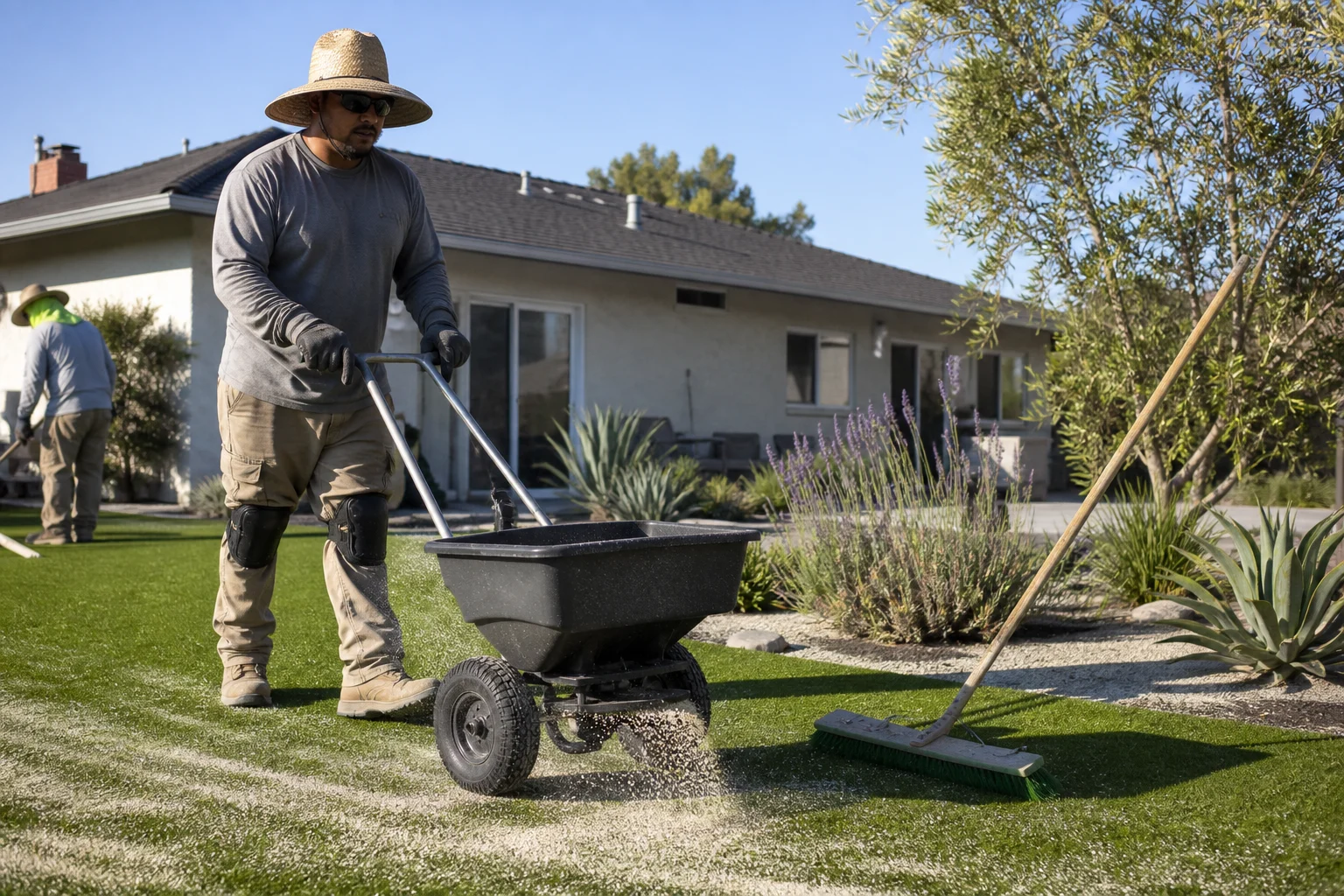
The savings assume the install was done right. Turf laid on a thin or poorly compacted base develops low spots that hold water and grow algae — now you’re rinsing more, not less. A quality install grades the base to drain, uses a perforated backing, and brushes in enough infill to keep blades upright and protect the backing from UV. Done properly, turf pays back the install over its 15–20 year life and asks very little in between.
Related service
This guide covers work we do. See Artificial Turf Installation or request a free estimate.
Keep reading
More guides
Ready for a yard that holds up to the heat?
Book a free on-site estimate. We measure, talk options and materials, and leave you with a clear number — no pressure.