Excavation & layout
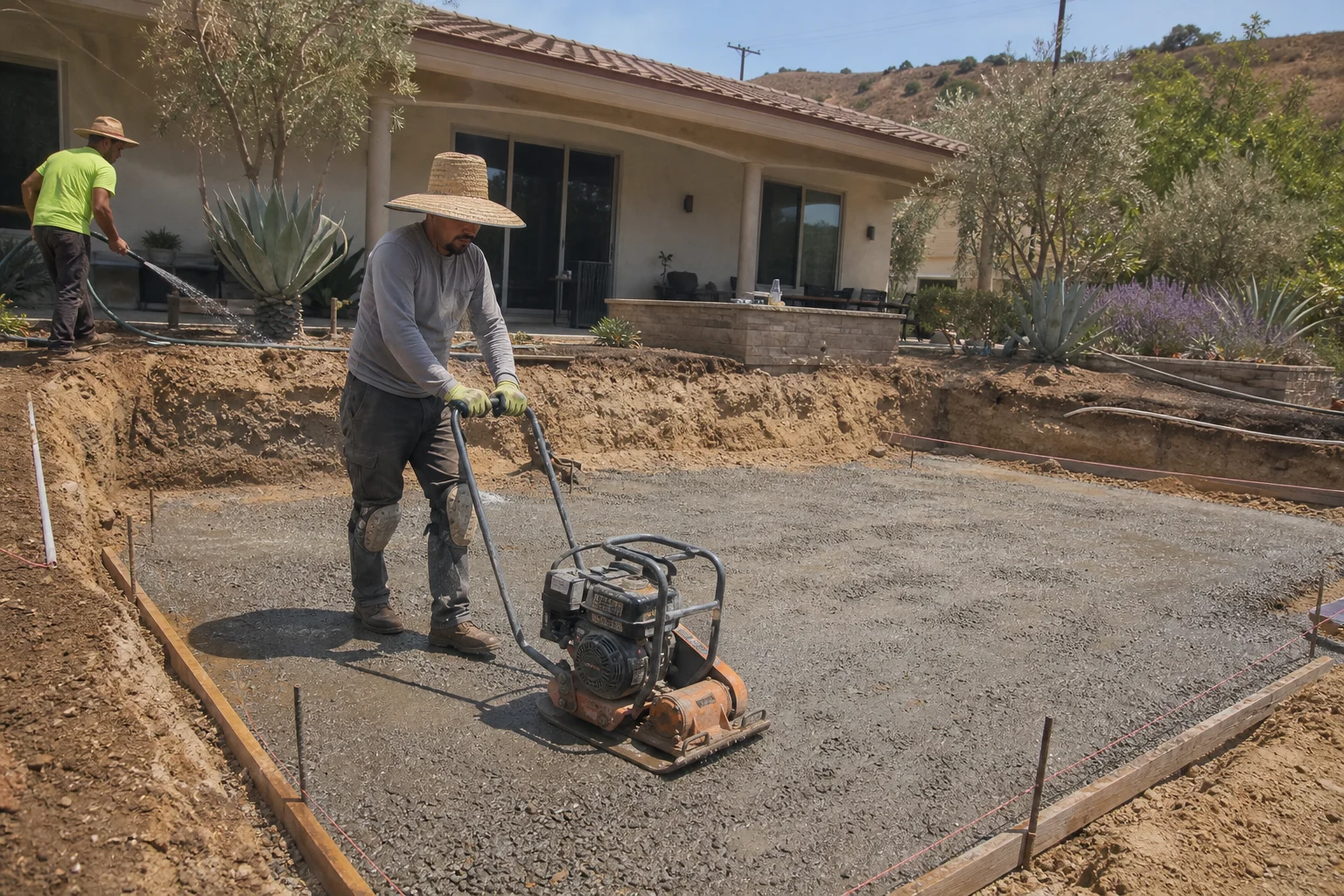
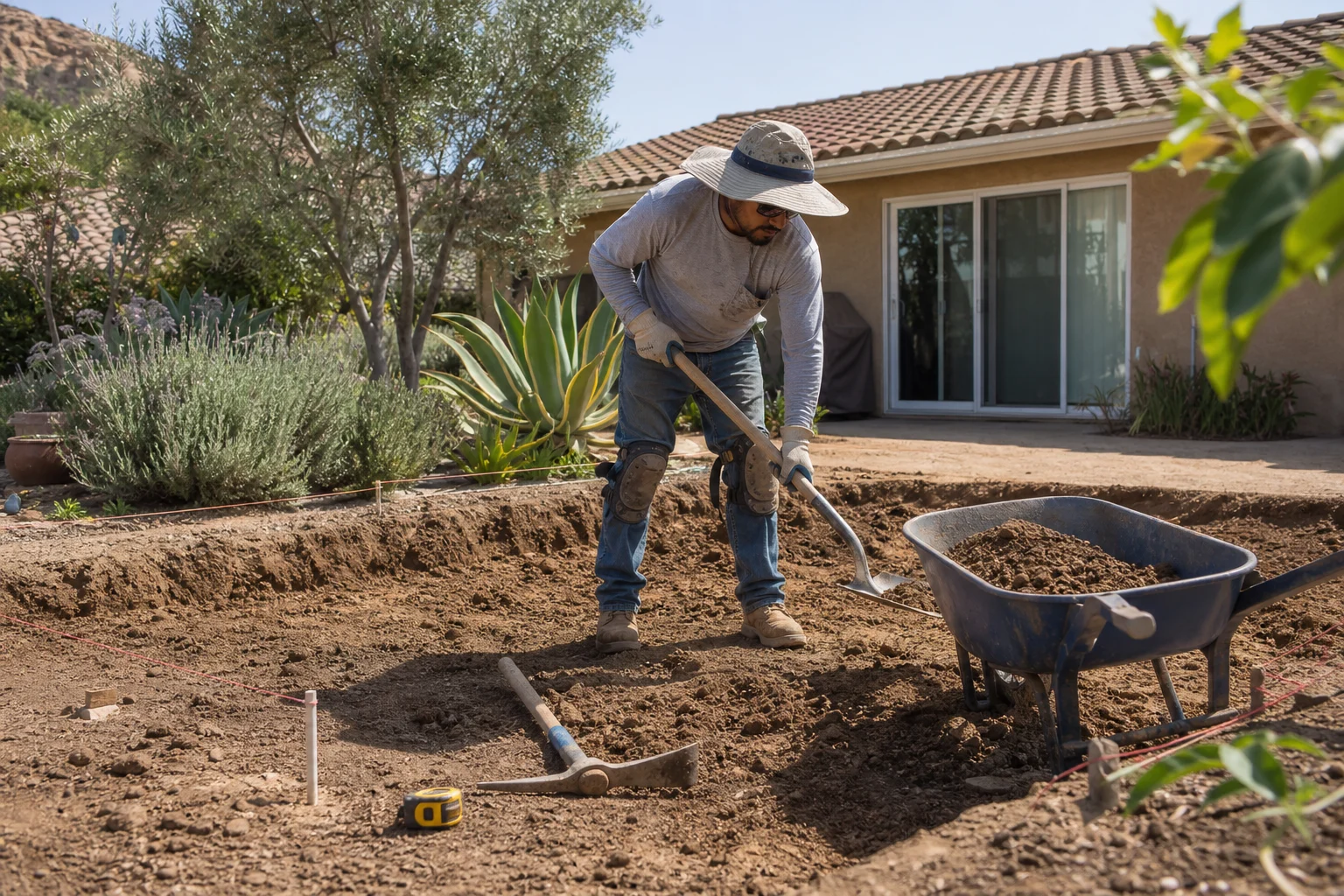
Dig to depth, confirm slope away from the house, and set string lines for the pattern and borders.
Your slab is cracked and settling, or there’s just bare dirt where the patio should be.
Paver patios, walkways, and driveways built on a real base — excavated, compacted, screeded, and edge-restrained — so the surface stays flat and the joints stay tight.
Overview
Pavers themselves rarely fail. What fails is the base: not deep enough, not compacted, no edge restraint, sand bed too thick. Then you get lippage, spreading joints, and weeds.
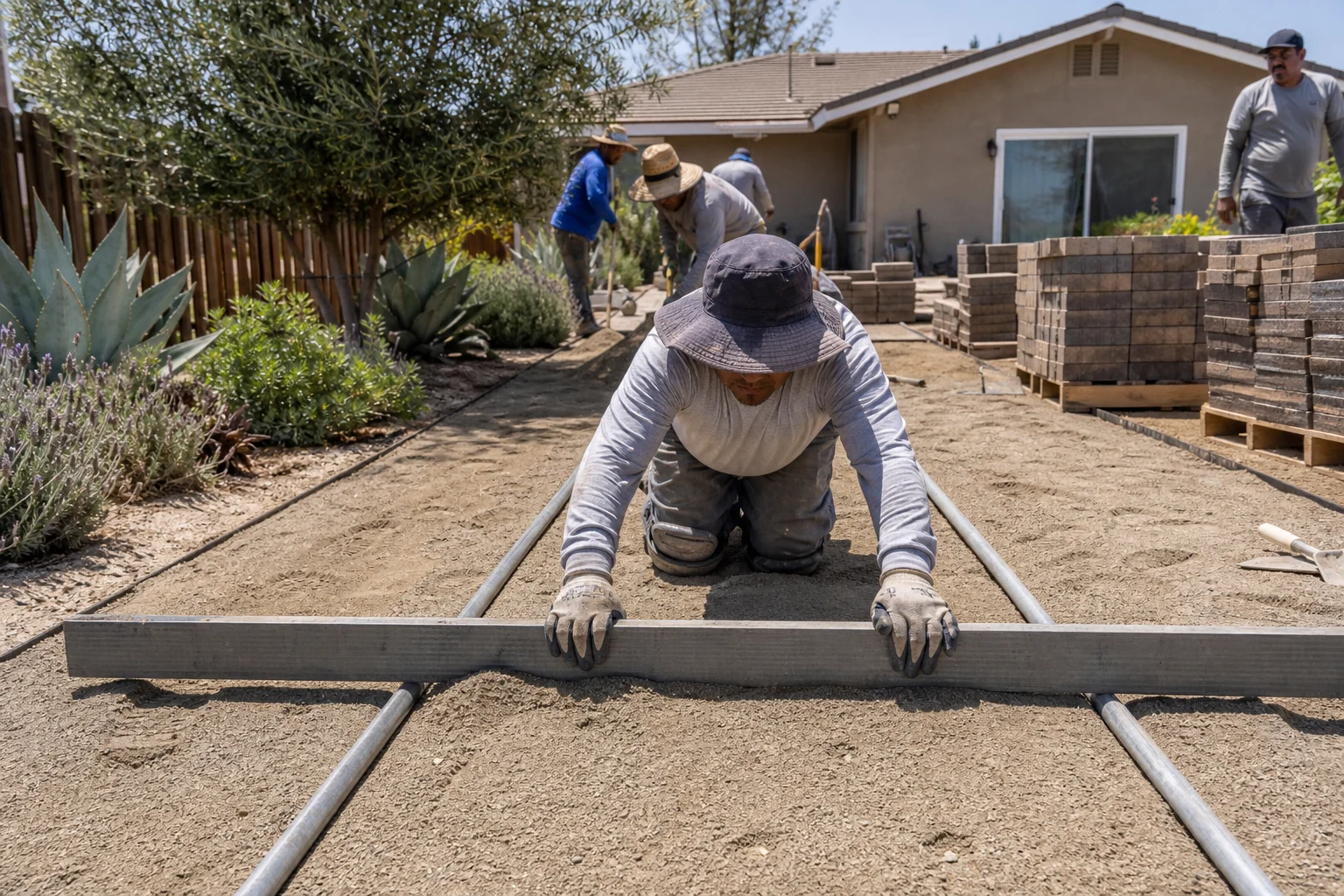
We excavate to depth, bring in road base and compact it in lifts, screed a thin bedding layer, then lay pavers to a string line. The perimeter gets a rigid edge restraint, joints are filled with polymeric sand, and the whole field is plate-compacted so it locks together as one surface.
What’s included
Dig to depth, confirm slope away from the house, and set string lines for the pattern and borders.
Road base compacted in lifts, then a screeded bedding layer at consistent thickness — not a thick sand cushion.
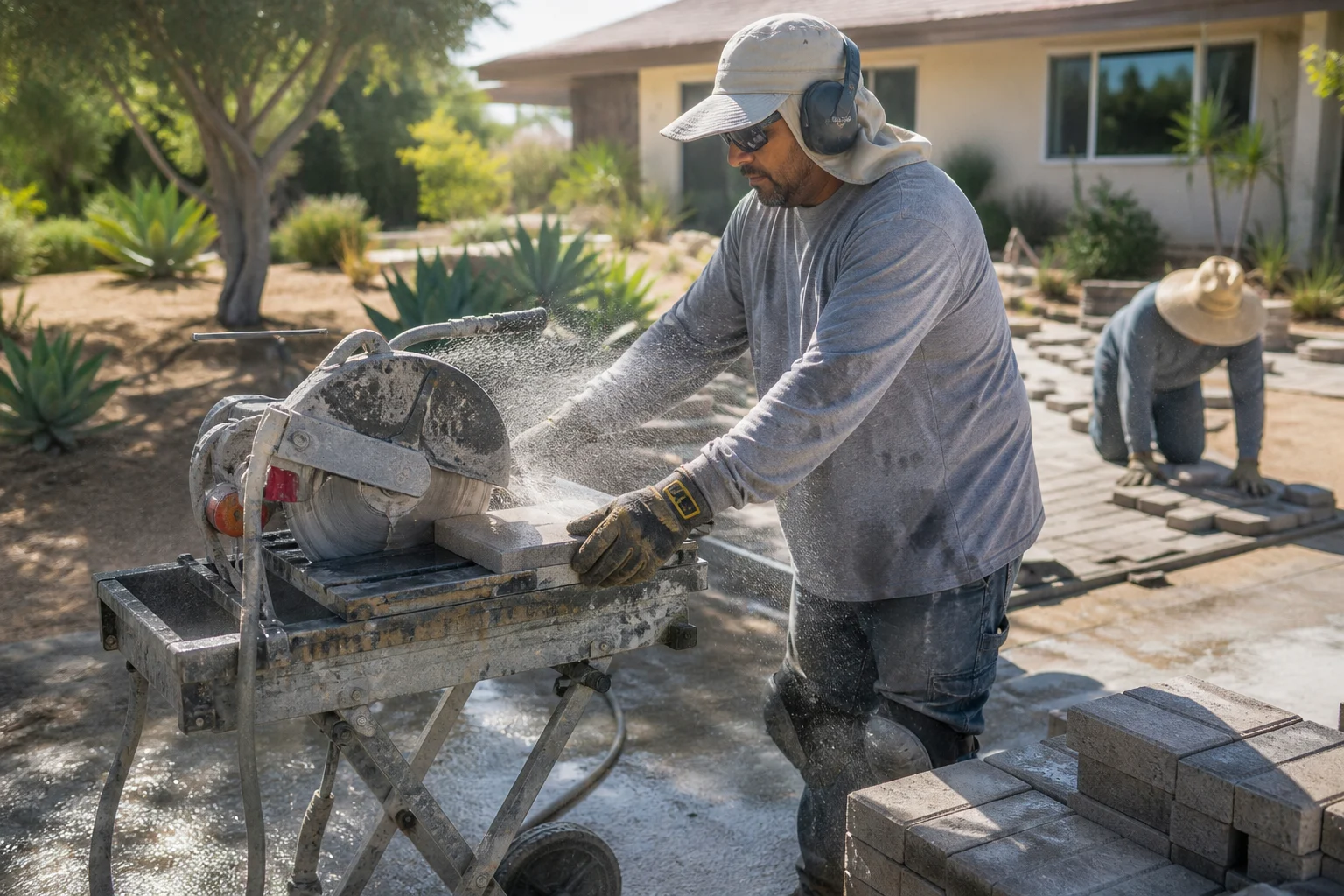
Pavers set to line, borders and soldier courses run, clean saw cuts at edges and penetrations.
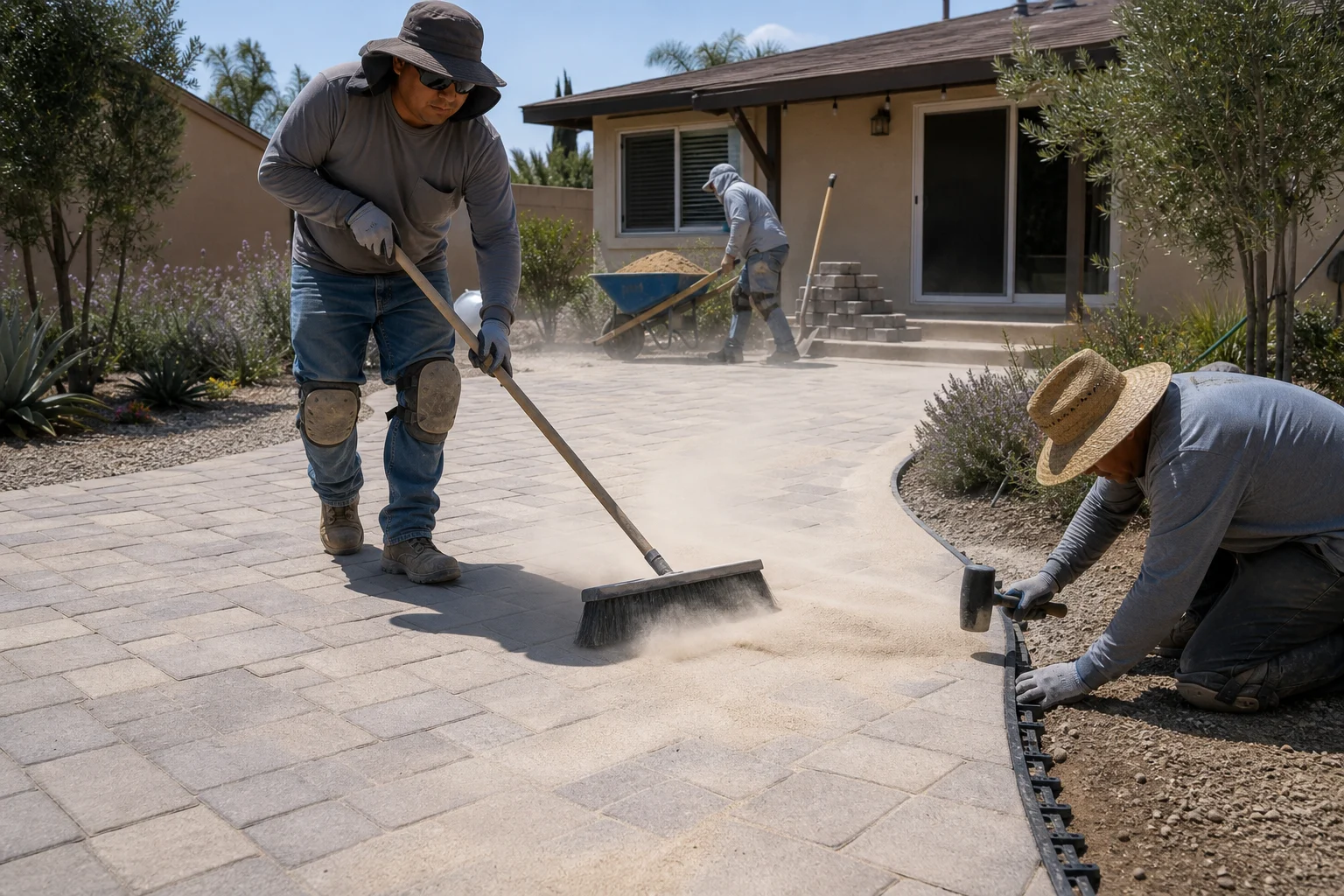
Rigid edge restraint installed, polymeric sand swept in, field plate-compacted and activated so joints lock.
Why it lasts
Polymeric sand binds the joints against washout and weeds, but only if the field is compacted properly first and the sand is activated correctly. Rushed on a windy afternoon, it hazes and fails. We take the time.
Edge restraint is non-negotiable. Without a locked perimeter, every load — a car, a full planter, foot traffic — pushes the outer pavers out and the pattern opens up. We restrain every edge that isn’t against a wall.
How it goes
Free on-site measure, drainage check, and a look at paver and pattern options. Written price.
Dig to depth, haul spoil, base in compacted lifts, screed the bedding layer.
Pavers to line, edges restrained, polymeric sand set, field compacted. Site cleaned and walked with you.
Recent work
Good to know
Pavers flex with ground movement, are easy to repair in a small area, and won’t crack. Stamped concrete is a lower up-front cost and a smoother monolithic look. We’ll walk the trade-offs for your yard.
Not readily. Polymeric sand plus a compacted, restrained field keeps joints tight. The odd wind-blown seed on top pulls out easily.
Often, or we blend a coordinating border. Bring a spare paver if you have one.
A typical backyard patio is 3–6 working days depending on size, access, and how much excavation the base needs.
Free estimate
Tell us the yard, the service, and when works for you. Rodrigo reviews every request and calls back — usually the same day.
Prefer to talk? Call 951-564-2960, Monday to Friday, 8–5.
Keep reading