Hardscape
Why Base Prep Decides Paver Patio Longevity
Show us a failed paver patio and we'll show you a base that was too shallow, poorly compacted, or missing an edge.
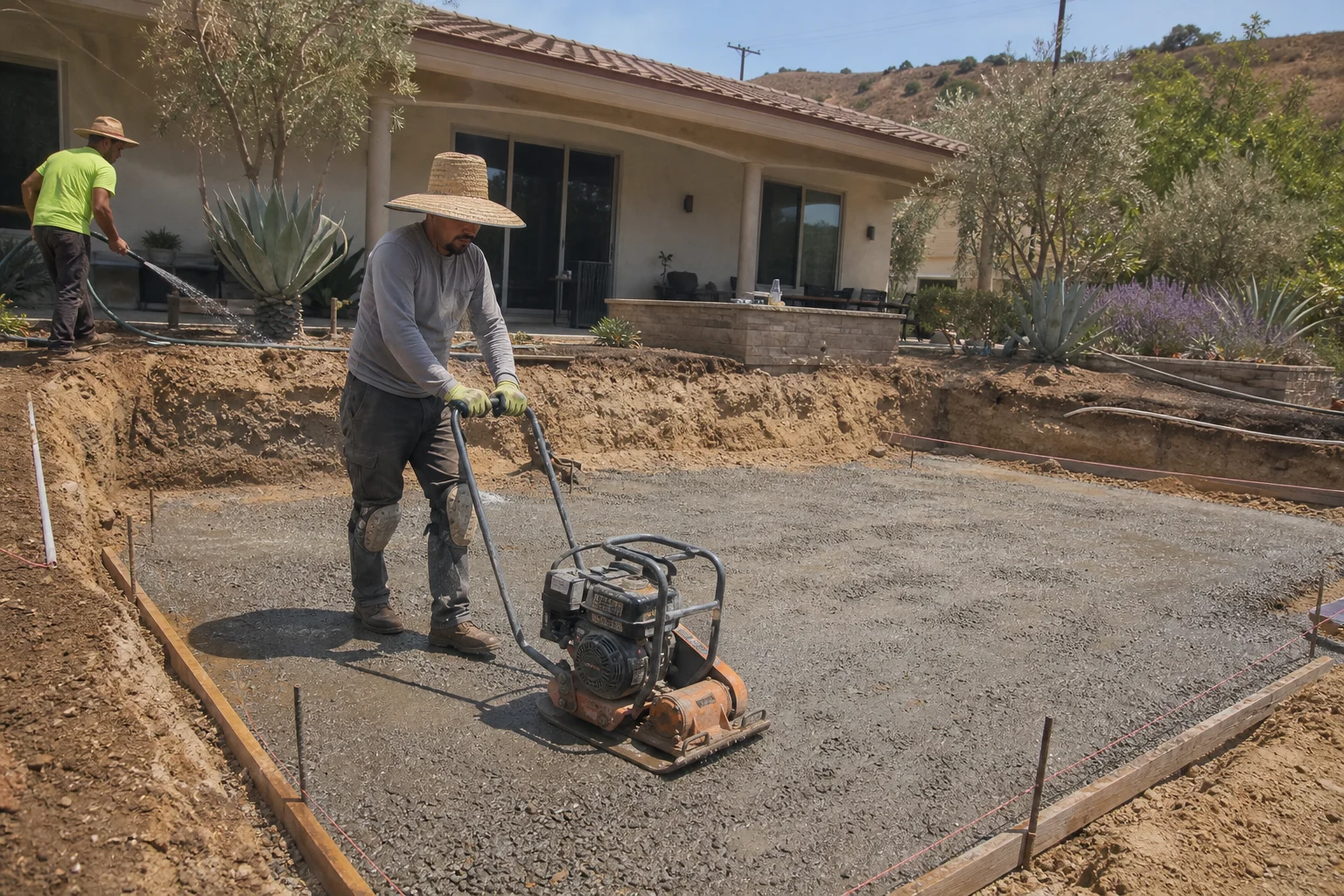
Depth and compaction
A patio needs several inches of compacted road base — more under a driveway — placed and compacted in thin lifts, not dumped and leveled in one pass. Each lift gets its own pass with the plate compactor. Shortcut the depth or the lifts and the base consolidates unevenly under use, and the surface follows it down into dips.
The bedding layer is thin on purpose
Above the base goes a screeded bedding course, kept to a consistent thickness. Homeowners sometimes see a thick sand cushion in a cheap install and think it’s generous — it’s the opposite. Thick sand ruts and migrates, and the pavers ride the ruts. Thin and uniform is what holds the surface flat.
Edge restraint locks it together
The perimeter of a paver field has to be restrained — a rigid edge spiked into the base — or every load pushes the outer pavers outward and the joints open from the edge in. Combined with polymeric sand in the joints and a final compaction pass, the restraint is what turns loose pavers into one interlocked surface. It’s the step most often skipped and the one that ends patios early.
Related service
This guide covers work we do. See Paver Patio Installation or request a free estimate.
Keep reading
More guides
Ready for a yard that holds up to the heat?
Book a free on-site estimate. We measure, talk options and materials, and leave you with a clear number — no pressure.